Spin, Rest, Repeat: Inside the Strange Rise of the Casino Fitness Routine
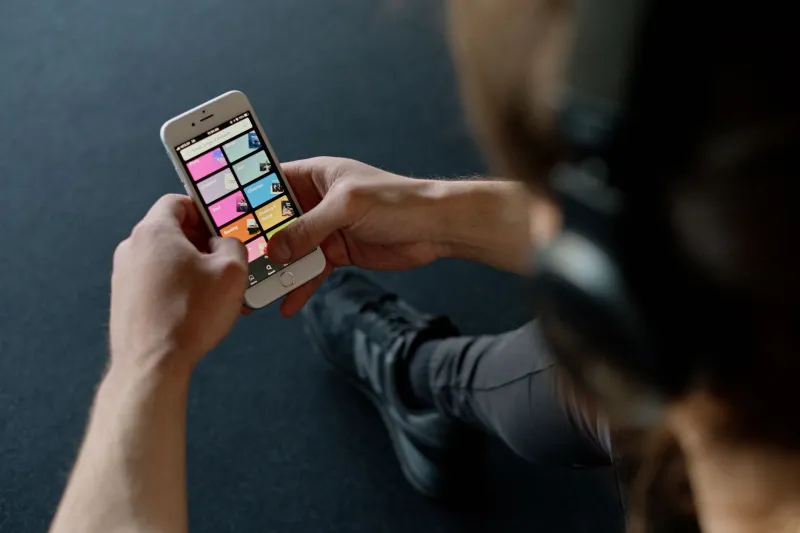
There's a guy in Columbus who does his casino play the way other people do CrossFit. Three sets of 789 cents. Rest days on the calendar. Results logged in a notes app between his step count and his grocery list.
He's not alone. Scroll enough gambling subreddits and group chats and you'll start spotting a pattern: players who've stopped treating mobile casino apps like a slot machine in their pocket and started treating them like a wellness habit. Fixed stakes. Fixed times. Fixed exits. Call it the small-stakes workout — and whether it's genuinely healthy or just a treadmill with worse odds is exactly the question worth asking.
The Rep Scheme: What a 'Set' Actually Looks Like
The format varies, but the skeleton is the same. You pick a stake — 7.89 dollars is popular around these parts for reasons our site name makes pretty obvious — and you treat it like one set at the gym. When the money's gone or the timer's up, the set ends. No adding a rep because you feel good. No quitting early because you feel bad.
Marcus, a 34-year-old HVAC tech from Ohio, walks me through his routine during a phone call he takes from his truck. "Monday, Wednesday, Friday. 7:45 p.m., after dinner, before I touch the TV remote. $7.89. When it's done, it's done." He's been running the same schedule for eight months. His spreadsheet says he's down $212 over that stretch. He sounds fine with that.
"It's entertainment with a membership fee," he says. "Same as my gym. I pay, I show up, I leave. The difference is the gym doesn't hit a bonus round."
Rest Days and the Habit Loop
The interesting part isn't the stakes. It's the rest days.
Behavioral folks have been describing the habit loop for decades — cue, routine, reward — and casino apps are engineered to make the loop as tight as possible. Push notification is the cue. Play is the routine. The near-miss and the withdrawal are the reward, delivered on a variable schedule that's about as addictive as psychology gets.
The workout crowd is essentially trying to hijack that loop. They install their own cue (a set time, a set day), their own routine (a fixed set), and their own reward (checking it off the log). Rest days are the firewall. Tuesday isn't a day Marcus "tries not to play." Tuesday doesn't exist as an option. The app stays in a folder he doesn't open.
Dana, a nurse in Phoenix who works rotating shifts, puts it bluntly: "If I have to decide every day whether to play, I lose that fight eventually. So I don't decide. The schedule decides."
That's the whole philosophy. Remove the daily negotiation and you remove the daily temptation. It's the same logic as laying your running shoes out the night before, except the shoes cost $7.89 and sometimes pay you back.
The Notes App Coach
Almost all of these players track results somewhere — a notes app, a spreadsheet, a paper notebook. Not profit-and-loss obsessives chasing an edge. More like people logging workouts: date, stake, session length, mood afterward.
The mood column is the tell. Dana logs hers because, in her words, "the number lies less than my memory." When she scrolled back through three months of entries and saw that her worst sessions always followed bad shifts, the pattern did what no willpower could: it made the risk visible. Now bad-shift days are automatic rest days.
That's the wellness framing doing real work. A bankroll limit tells you when to stop. A log tells you why you should.
Discipline or Spreadsheet Theater?
Here's where the opinion part kicks in, because I keep going back and forth on this.
The case for: structure beats vibes. Most gambling harm doesn't come from one bad night; it comes from a thousand small, unsupervised ones. Anything that converts an open-ended habit into a closed, bounded ritual — fixed stake, fixed time, fixed log — is moving in the right direction. If the alternative is shapeless scrolling at 1 a.m., a spreadsheet is an upgrade.
The case against: a routine can also be a disguise. "I only play on schedule" can quietly become "I have permission to play every scheduled day, forever," and the structure that was supposed to cap the habit starts normalizing it. There's also the risk that the log itself becomes the game — chasing a streak of "disciplined sessions" the way you'd chase a bonus round. Discipline with a jackpot attached isn't discipline. It's just better-dressed play.
And one more thing worth saying plainly: no amount of structure changes the math. These are still games with a house edge, and a well-organized loss is still a loss. The workout framing shouldn't become a story you tell yourself so the bill feels like a membership fee.
The Self-Audit: Five Questions Before You Call It a Routine
If this approach appeals to you, run it through this checklist first. Honest answers only — the spreadsheet can't lie if you don't.
- Is the stake truly fixed, or just fixed when you're winning? If a loss sends you hunting for a "top-up," that's not a set. That's a set that only counts when it goes well.
- Do rest days exist on the calendar, or just in your intentions? If nothing in your week structurally prevents play, the structure is decorative.
- What does the mood column say? If your logged mood after sessions trends worse over a month, the routine is working perfectly at something you don't want.
- Would you keep the schedule if the app paid nothing? If the answer is no, the ritual is a delivery mechanism, not a practice.
- Can you skip a scheduled session without feeling off? If a skipped set itches like a missed workout, the habit loop has you, not the other way around.
Pass all five and you've probably built something genuinely useful — a bounded, honest, cheap form of entertainment with a paper trail. Fail a couple and the kindest read is that you've built a very organized way to lose more slowly.
Either way, the trend says something bigger about mobile gambling in America. A generation raised on habit trackers and streak counts is meeting the casino app on its own terms — borrowing the app's psychology and pointing it back at the app. Whether that's a workout or a wager is, as always, in the numbers. And the numbers, unlike the spins, you actually control.